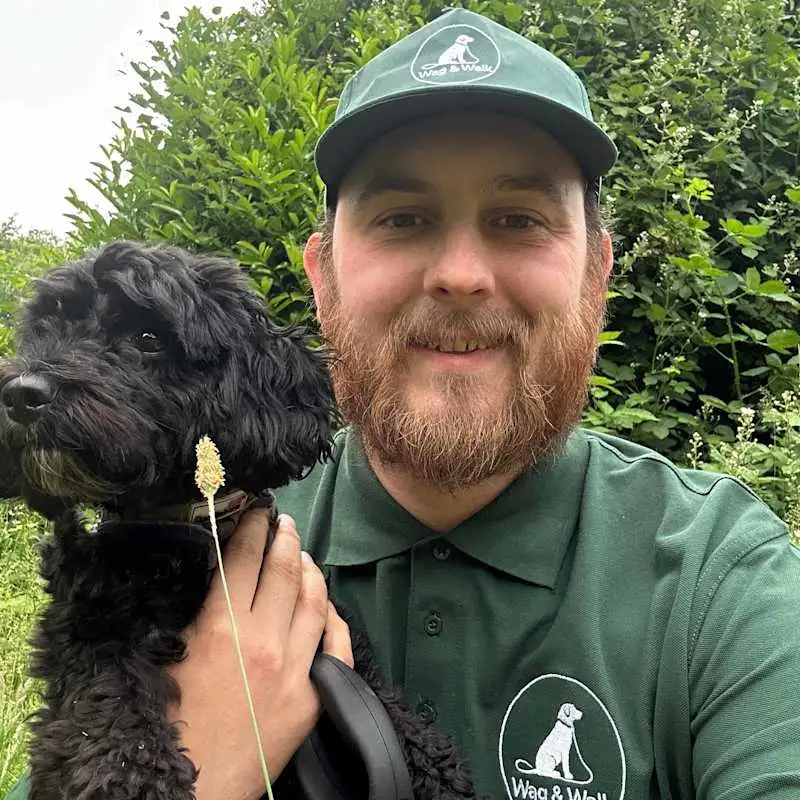
When I first decided to start Wag & Walk Middleton, I thought I knew what I was building.
I thought I was starting a dog walking business.
In reality, I was starting an operations business that happened to involve walking dogs.
Those sound like the same thing, but they’re completely different.
Like most people looking from the outside, I imagined my days would be filled with dogs, parks and fresh air. I expected finding customers to be the biggest challenge. Once I had them, I assumed the rest would be fairly straightforward. Get insurance. Buy a lead. Turn up. Walk the dog.
I couldn’t have been more wrong.
The first surprise wasn’t getting customers
Finding customers is difficult.
It still is.
But I realised very quickly that getting customers is only half the challenge.
Keeping the business organised as those customers arrive is an entirely different problem.
The first client was exciting.
The second client changed everything.
The reason wasn’t because I suddenly became busy.
It was because the second client worked an entirely different shift pattern.
Up until that point, every booking existed in isolation. I was treating each enquiry as a one-off. Every new customer meant creating another bespoke solution.
That’s when it clicked.
There isn’t a “normal” dog walking customer.
Every owner works differently.
Every dog has different needs.
Every household has different routines.
I realised I wasn’t selling “I’ll walk your dog.”
I was designing a service that had to fit into somebody else’s life.
That single realisation changed how I looked at the entire business.
I stopped thinking like a dog walker
Before starting, I assumed professional dog walkers did group walks.
I actually thought solo walks were something I’d eventually graduate from.
Instead, I discovered the opposite.
The more I spoke to owners, the more I realised that solo walks weren’t a compromise.
They were a premium service.
One dog.
One-to-one attention.
No competing personalities.
No rushing because six dogs all wanted to sniff different things.
The dog’s entire walk became about them.
Instead of copying what everyone else was doing, I started asking a different question.
“What outcome is the customer actually buying?”
That changed everything.
A house visit wasn’t just someone checking in.
It became the minimum care package.
Company.
Fresh water.
A toilet break.
A 30-minute solo walk wasn’t simply half an hour.
It became dedicated one-to-one attention with enough time to sniff, explore and enjoy the walk without being dragged around in a pack.
A one-hour walk wasn’t just double the time.
It became extra enrichment, exercise and freedom, particularly for dogs with higher energy requirements.
I wasn’t selling time anymore.
I was selling outcomes.
The business became about systems
The next surprise was how little of my week was actually spent walking dogs.
Today, it’s probably around a 50/50 split.
Half my time is delivering the service.
The other half is building the business that allows me to deliver it.
Marketing. Website improvements. SEO. Social media. Customer enquiries. Meet and greets. Planning travel. Updating calendars. Writing policies. Improving onboarding. Following up leads. Creating new services. Researching walking routes. Buying equipment.
Most people don’t see any of that.
They see an hour in the park.
They don’t see the business behind it.
The turning point came when I realised I couldn’t keep running everything from my phone.
I bought a laptop, not because I wanted one, but because I needed somewhere to organise everything properly.
I’d find myself sitting in cafés between bookings trying to manage admin from my phone.
It worked.
Until it didn’t.
That purchase represented something much bigger.
I had stopped treating Wag & Walk Middleton like a side hustle.
I had started treating it like a business.
The meet and greet taught me another lesson
Early on, every meet and greet felt different.
I’d leave wondering whether I’d remembered everything.
Had I asked about feeding?
Emergency contacts?
Medical issues?
Triggers?
Walking preferences?
Keys?
I wasn’t forgetting things because I was careless.
I was relying on memory.
Memory doesn’t scale.
Processes do.
That’s why I built a meet and greet checklist.
Not because I wanted appointments to become robotic.
Because I wanted every customer to receive the same high standard.
Good systems don’t remove personality.
They remove inconsistency.
Growth creates complexity much faster than you expect
One of the biggest surprises came from places I hadn’t even considered.
I joined multiple dog walking platforms hoping to generate enquiries.
Every platform wanted something different.
One needed social media links.
Another wanted a website.
Another required specific photographs.
Another needed business information presented differently.
Suddenly I wasn’t just responding to enquiries.
I was building digital assets.
Planning content.
Scheduling time.
Managing information.
That’s when I realised I couldn’t simply fit admin around walks whenever I had a spare five minutes.
The business itself needed dedicated time.
That was another mindset shift.
Planning wasn’t something I did after work.
Planning became part of the work.
Simpler is usually better
One example that really taught me this lesson was Flex Credits.
Originally, the idea was much more complicated.
It made perfect sense in my head.
Unfortunately, if I struggled to explain it, how could I expect customers to understand it?
So I stripped everything back.
Eventually it became almost like stamps.
Flex30.
Flex60.
One stamp equals one walk.
Immediately it became easier.
Interestingly, simplifying the customer experience usually meant making the operational side more sophisticated.
Customers don’t need complexity.
They need clarity.
The biggest mistake I made
Looking back, there are three mistakes I’m actually grateful for.
The first was treating every booking as its own unique problem instead of building repeatable products.
The second was believing fixed appointment times created a better customer experience.
The third was trying to keep everything in my head.
All three mistakes taught the same lesson.
Every custom decision creates more work.
Every repeatable process removes work.
Once I realised that, everything started changing.
Instead of asking, “How do I handle this booking?” I started asking, “How do I make sure I never have to solve this problem again?”
That’s a completely different way of thinking.
Customer experience and operational efficiency aren’t opposites
For a while I believed flexibility made a business look less professional.
Now I think the opposite.
Take booking windows.
Originally I wanted everyone booked at exact times.
It sounded professional.
It also created unnecessary pressure.
Travel delays happen.
Dogs take longer than expected.
Life gets in the way.
Booking windows gave customers what they actually cared about while giving the business enough flexibility to consistently deliver.
The same thing happened with the meet and greet checklist.
Customers didn’t receive less personal service.
They received a more consistent one.
The best operational improvements often become the best customer experience improvements too.
Building a business means deciding what not to become
One of the biggest lessons from this journey has been saying no.
I decided not to build the business around group walks.
I chose not to stay entirely inside Rover’s ecosystem.
I abandoned rigid appointment times.
I simplified pricing instead of making it increasingly clever.
Each decision removed complexity.
Each decision made the business stronger.
Sometimes progress isn’t adding another service.
It’s removing the wrong one.
If I could start again
If someone asked me today what I’d do differently, my answer wouldn’t be about marketing or equipment.
I’d start building systems far earlier.
I’d stop copying competitors without understanding why they operated that way.
Most importantly, I’d expect complexity to arrive much sooner.
Growth sounds exciting.
It is.
But growth also multiplies decisions.
Every customer brings new information.
New schedules.
New requirements.
New expectations.
Without systems, growth eventually becomes stress.
With systems, growth becomes opportunity.
That’s probably the biggest lesson I’ve learned so far.
I thought I was building a dog walking business.
In reality, I was building a business that just happens to walk dogs.
And understanding that difference has changed everything.
Systems make reliable care possible
Reliable dog care is built on more than walks. It depends on planning, communication and trust.