At the start of 2026, if you’d asked me what I thought I’d be doing by the summer, dog walking wouldn’t have made the list.
For over a decade, I’d built a career in digital project management. I’d worked on large projects, managed budgets, coordinated teams and spent years developing skills that I thought would define my professional future.
The problem was that somewhere along the way, I’d become increasingly unhappy.
I wasn’t waking up excited for work. I wasn’t looking forward to Mondays. I wasn’t feeling fulfilled. The stress, anxiety and constant pressure had gradually become normal, and I had started to lose confidence in myself and my career.
For years, I had been so focused on climbing the next rung of the ladder that I never stopped to ask whether I actually wanted the ladder I was climbing.
When I left full time employment, I suddenly had something I’d been missing for a long time.
Space.
At first, I didn’t have a plan. In fact, I had the opposite. I had uncertainty.
The Walks That Changed Everything
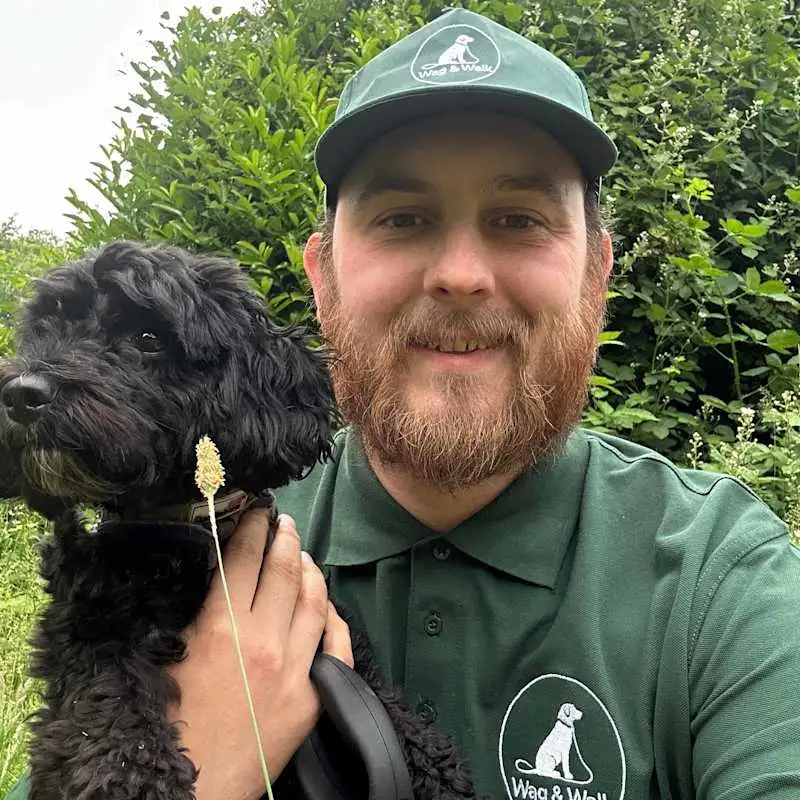
One thing that had become increasingly important to me was walking my dog, Miggy.
Looking back, I think those walks were telling me something long before I was ready to listen.
The amount of exercise was helping. Being away from screens was helping. Being outdoors was helping. Most importantly, they were often the only moments of genuine mental quietness I experienced during the day.
No emails. No meetings. No deadlines. No notifications. Just me and Miggy.
Miggy has always been happiest when she’s running through grass, exploring new places and enjoying the outdoors. Watching that every day started to shift something in my own thinking.
I realised I looked forward to those walks more than I looked forward to work. That wasn’t a great sign.
When I started looking at project management jobs again, the feeling of dread returned almost immediately. The thought of stepping back into another corporate role made my stomach sink.
One conversation with my partner changed everything. She asked me a simple question.
“What do you actually care about most?”
The answer came immediately. Dogs.
The Opportunity Hidden In Plain Sight
Once I’d answered that question honestly, I started looking at things differently.
During Covid, millions of people had experienced something I’d experienced myself. They finally had enough flexibility to get a dog. Remote working had made dog ownership easier than ever.
But by 2026, many businesses were pushing people back into offices more frequently. I started wondering what that meant.
If more people were returning to offices, more dogs would be spending longer periods alone. That felt like a genuine need.
For the first time, I could see a potential opportunity that combined something I genuinely cared about with a real-world problem.
I didn’t spend months building a business plan. I didn’t commission market research. I downloaded Rover and paid the £20 verification fee.
That was my first investment. Twenty pounds.
The First Test
Then nothing happened.
For two weeks, I waited. And waited. And waited.
No enquiries. No bookings. No customers.
Every day that passed made me question the idea more. Had I overestimated the opportunity? Were my prices wrong? Did people not trust my profile? Were the photos bad? Was it because I had no reviews? Was the market already saturated?
The self-doubt started creeping in. At the same time, I found myself looking at project management jobs again. The same feeling of dread I’d felt before was starting to return.
Looking back now, I realise something important. Starting a business isn’t usually one big leap of confidence. It’s a series of small moments where you keep going despite having very little evidence that things will work.
Then Rudy arrived.
The Customer That Changed Everything
Rudy was my first booking.
To anyone else, he was simply a customer. To me, he was proof.
Proof that somebody trusted me with their dog. Proof that somebody was willing to pay me. Proof that there was demand. Proof that this wasn’t just an idea anymore.
More importantly, Rudy wasn’t a one-off walk. His owner worked a changing shift pattern and needed ongoing support. That meant recurring work.
For the first time, I could see actual numbers rather than possibilities.
I remember looking at the booking and realising something that felt huge at the time. One customer had effectively covered my mortgage.
That was the moment my thinking changed. Not because I’d become successful overnight, but because I now had evidence. The idea wasn’t imaginary anymore.
My First Major Mistake
Then I immediately made one of my first business mistakes.
During the meet and greet, Rudy’s owner explained that he found Rover difficult to use because of his changing shifts. I understood the problem. I also realised that if I had my own insurance, I could support him directly and avoid Rover’s fees.
So that’s what I did. I got insured and moved the booking off-platform.
The result? An immediate seven-day ban from Rover.
At the time, it felt disastrous. But it turned out to be one of the best things that could have happened, because it forced me to stop relying on a platform and start building a business.
I also discovered another mistake. I’d accidentally quoted my 30-minute rate instead of my 60-minute rate.
For two weeks, I was earning £11 for an hour-long walk. Less than minimum wage.
I had to have an awkward conversation with Rudy’s owner and explain the mistake. Fortunately, he was incredibly understanding.
That experience taught me a lesson I’ll never forget. Pricing isn’t just a number. It’s a system. Get the system wrong and everything else becomes harder.
The Rover Ban That Changed My Thinking
The Rover ban forced me to ask a different question. If I couldn’t rely on Rover, where would customers come from?
That’s when the project manager inside me started waking up.
I created social media accounts. I built a brand. I created a logo. I developed brand guidelines. I ordered a uniform. I set up business listings. I experimented with lead generation platforms.
For the first time, I stopped thinking like someone trying to get another dog walking booking. I started thinking like someone building a company.
The funny thing is that I thought I was leaving project management behind. Instead, I was finally finding a way to use the parts of it I’d always enjoyed.
The Skills I Didn’t Realise I Had
One of the biggest lessons from this journey is that skills transfer in ways you don’t expect.
When I started Wag & Walk Middleton, I had:
- No clients.
- No website.
- No reviews.
- No social media audience.
- No brand.
- No dog walking business experience.
What I did have was twelve years of experience solving problems.
When I looked at Wag & Walk Middleton, I wasn’t asking what dog walkers normally do. I was asking: “What would a digital marketing agency recommend if this business was a client?”
That mindset changed everything.
Instead of waiting for customers, I focused on trust. Would customers trust the brand? Would they trust me with their dog? Would they trust me with their house keys? Would they feel confident booking?
Every decision started from that perspective. The logo mattered. The uniform mattered. The website mattered. The reviews mattered. The customer journey mattered. The systems mattered.
The Surprises Nobody Tells You About
One thing I’ve learned is that dog walking isn’t really a dog walking business.
It’s a logistics business. It’s a scheduling business. It’s a capacity planning business. It’s a marketing business. It’s a customer service business.
The dog walking part is actually the easy bit. The real challenge is everything around it.
Travel time. Route planning. Lead qualification. Customer onboarding. Policies. Pricing. Retention. Capacity management.
At one point, I thought Bark was incredible because my first two leads became customers. I had a 100% conversion rate. Then reality arrived.
I started spending credits on leads that weren’t the right fit. My conversion rate dropped dramatically. I learned that generating leads and qualifying leads are two completely different skills.
I learned that a full diary isn’t necessarily a profitable diary. I learned that demand isn’t always the biggest challenge. Sometimes capacity is.
The Thing I’m Most Proud Of
People often assume the thing I’m most proud of is the revenue. Or the clients. Or replacing employment.
It isn’t. It’s the brand.
When I look at Wag & Walk Middleton today, I don’t just see a logo. I see proof.
Proof that I can build something. Proof that I can learn new things. Proof that I can create opportunities instead of waiting for them.
For years, I’ve struggled with imposter syndrome. I’ve often found it difficult to see in myself what other people seemed to see.
Building Wag & Walk Middleton has changed that. Not because it’s become a massive business. Not because I’ve “made it.” But because I’ve created something real. Something that didn’t exist a few months ago.
Starting Again
Today, Wag & Walk Middleton has grown from zero clients and zero revenue into a growing business with multiple recurring clients, a recognised local brand, a website, social media presence and a clear direction for the future.
More importantly, it’s changed my relationship with work.
I don’t get Sunday scaries anymore. I spend more time outdoors. I feel healthier. I feel more in control. I feel proud.
Most of all, I feel like I’m building something for myself.
If there’s one lesson I’ve taken from this experience, it’s that it’s never too late to start again.
The skills you’ve built throughout your life rarely go to waste. They often reappear in places you never expected.
And confidence doesn’t arrive before action. It arrives because of action.
If I could speak to myself from January 2026, I’d say this:
“You’ve learnt so much over the last 12 years and it’s all going to come in handy. Believe in yourself and you will make it work.”
Turns out, that was exactly what I needed to hear.
Planning builds reliable care
Reliable dog care is built on more than walks. It depends on planning, communication and trust.